






Amani Khalfan (she/her)
Program Manager
Rita Morbia (she/her)
Program Manager
OUR WORK BY COUNTRY

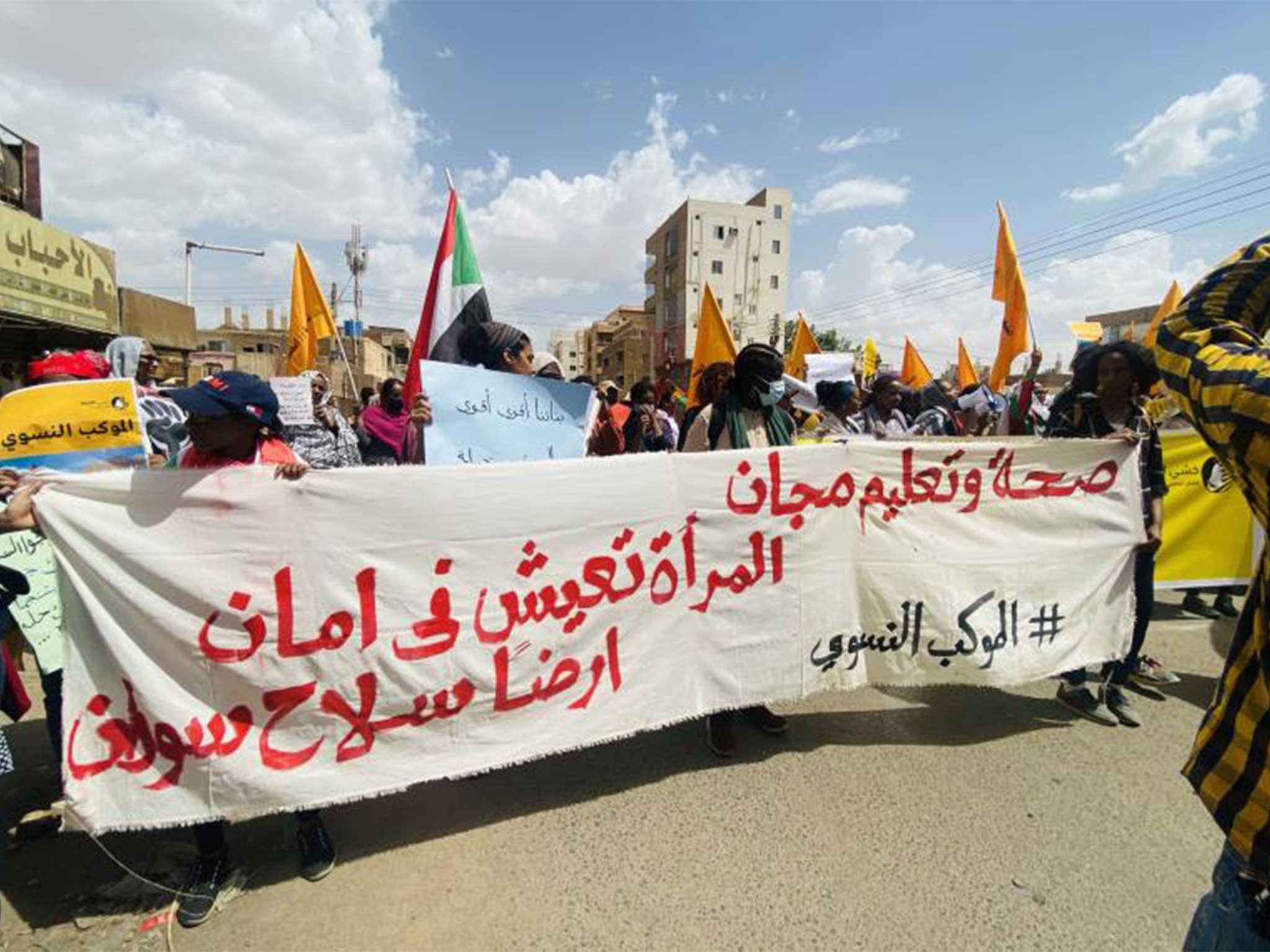
The women’s rights movement in Sudan has a long and vibrant history despite political, social and religious restrictions. Inter Pares has worked with feminist organizations in Sudan for over 30 years to promote women's rights and gender justice.
Photo: Rita Morbia/Inter Pares
A discriminatory legal framework violates women’s rights and women’s ability to exert their agency, in both the private and public spheres. Widespread societal discrimination endangers the LGBTQI+ community. Despite these restrictions, the women’s rights movement in Sudan has a long and vibrant history.
In 2019, women and youth led a non-violent revolution in Sudan that overthrew the 30-year military dictatorship of Omar el-Bashir. A civilian-led government that prioritized women’s rights was in sight. Tragically, the army and the paramilitary Rapid Support Forces (RSF) disrupted this transition in 2021 when they carried out a joint military coup. In April 2023, escalating tensions between the army and the RSF erupted into a devastating and ongoing conflict, displacing nearly one-third of the country’s population within a year and precipitating the world’s largest humanitarian crisis.
They are reimagining their work—often from outside of Sudan. They remain committed to supporting communities affected by war.
Our counterparts—SAGIA, SWRC and the Sudanese Organization for Research and Development (SORD)—promote gender equality and women’s political participation and combat sexual and gender-based violence. They also engage in democratic peacebuilding and food sovereignty. Through a feminist analysis, they mobilize youth for human rights and peace, while advocating for fundamental freedoms for the LGBTQI+ community. Outside of Sudan, we co-chair the Canadian Civil Society Working Group on Sudan, fostering solidarity and advocating for a peaceful, democratic future.