

OUR WORK BY COUNTRY
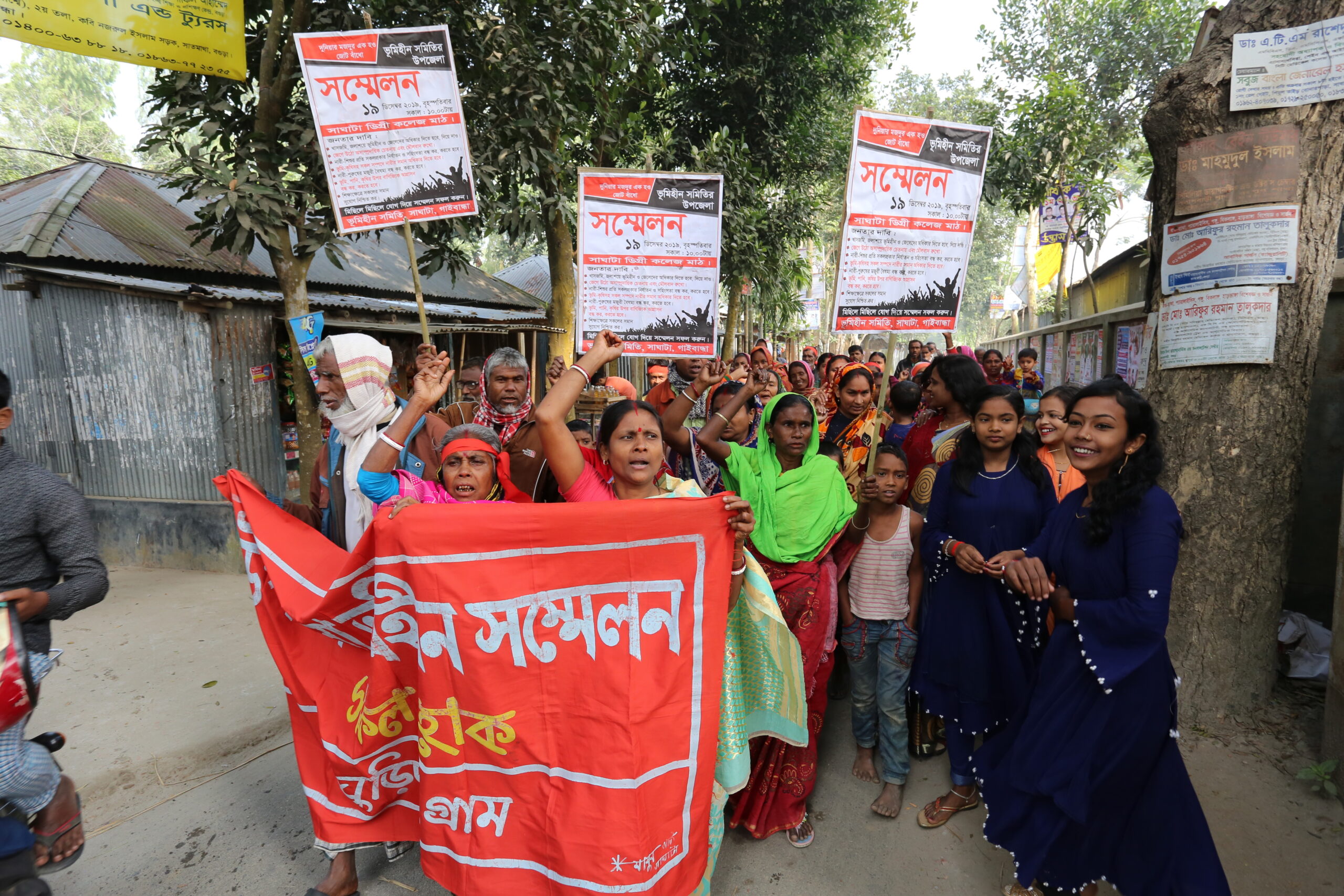
Our counterpart Nijera Kori brings poor, marginalized women and men together in local groups where they learn about their rights and gain the confidence to demand those rights be respected.
Photo: Nijera Kori
Those who do not own land—commonly known as landless people—are restricted in their access to meaningful employment, education, social services and political representation. For landless people, the risk of abuse, exploitation and eviction is high. In Bangladesh’s patriarchal society, gender-based violence and child marriage are pervasive and religious fundamentalism is on the rise.
Landless people gather with other marginalized groups in mass mobilizations to make their voices heard. Recently, youth are becoming more central to these mobilizations and are leading the call for democratic and social reform.
Nijera Kori brings together over 200,000 landless people in local committees in over 1,100 villages across the country. These committees—which include women and youth—organize to know their rights and mobilize to take collective action to hold the state accountable for these rights. They mobilize to resist land grabs, prevent child marriage, seek justice in cases of sexual assault and raise awareness about gender-based violence. Whether in schools, hospitals or the justice system, landless people are an essential force for challenging gender norms, patriarchal practices and restricted access to land.
No posts found.
No posts found.