



OUR WORK BY COUNTRY
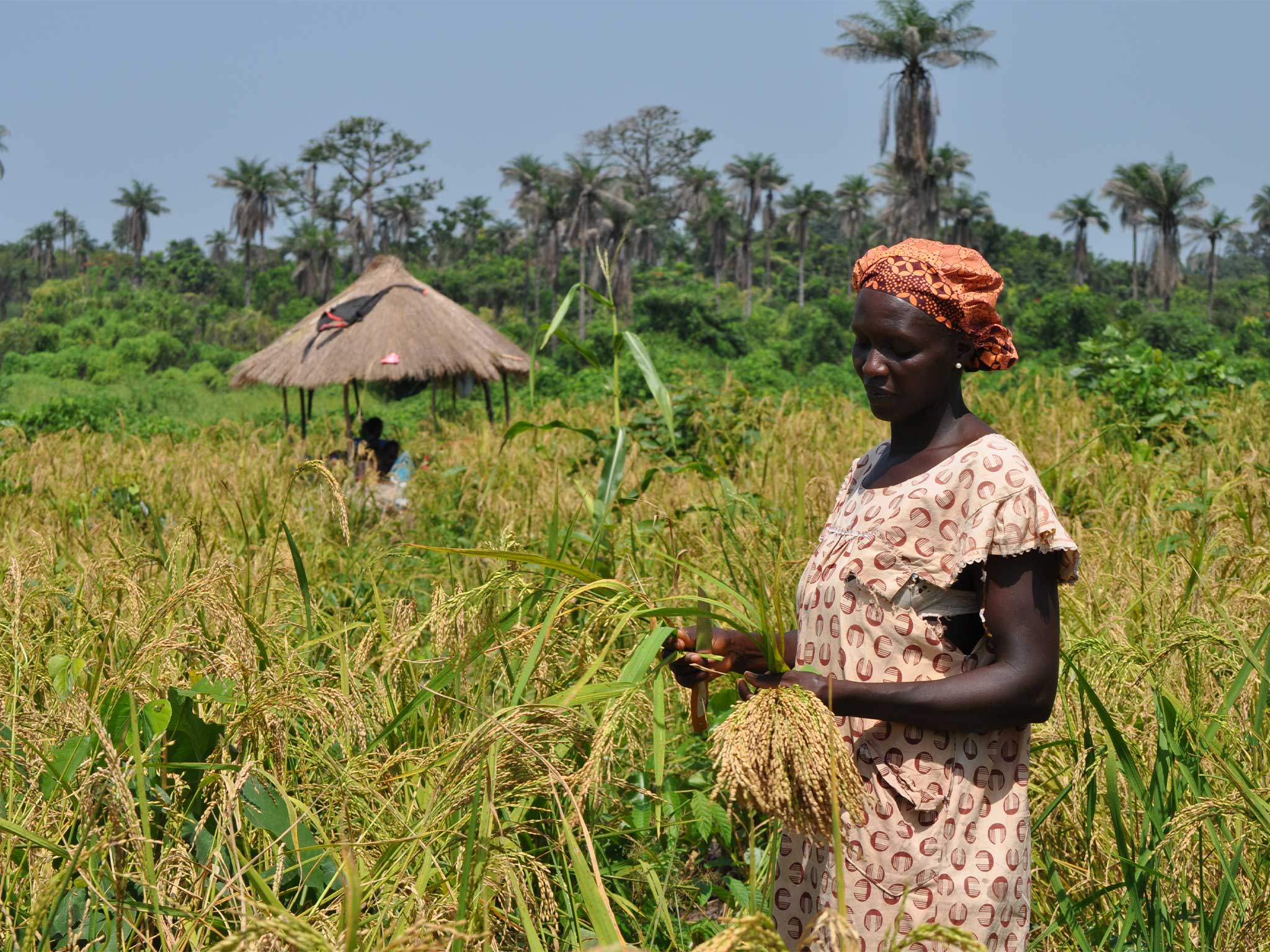
A woman farmer harvests rice in Bianga, Cacheu region, Guinea-Bissau. Inter Pares works with counterparts to support women farmers, like the one pictured here, to strengthen their control over resources and agricultural knowledge.
Photo: Tiniguena
Most of the population lives directly off the land and sea. The country is experiencing harsh impacts from climate change which threaten harvests and livelihoods, exacerbating poverty and driving migration. Political instability further undermines wellbeing. Rural women are the keepers of traditional farming knowledge and preserve a rich diversity of foods and seeds. However, laws prevent women from owning or inheriting land and patriarchal traditions undervalue women’s leadership.
Local communities are leading efforts to protect the country’s rich biodiversity, promoting agroecology and conservation practices to combat environmental degradation. Despite longstanding challenges, the commitment to social justice and ecological resilience is steadfast.
We work to protect the country’s unique biodiversity, promote and strengthen women’s deep knowledge of agriculture and build community resilience against the effects of climate change.
Together, we collaborate to strengthen local community control over resources—including The Community Marine Protected Area of Urok in the biodiverse Bijagos Archipelago. Tiniguena also equips young people as the next generation of social leaders—bringing them to rural areas to immerse themselves in their country’s rich environments and learn about environmental conservation, traditional cultural knowledge, social mobilization and democracy.
Inter Pares acknowledges Global Affairs Canada for its financial support for our work with counterparts in Guinea-Bissau.
No posts found.
No posts found.