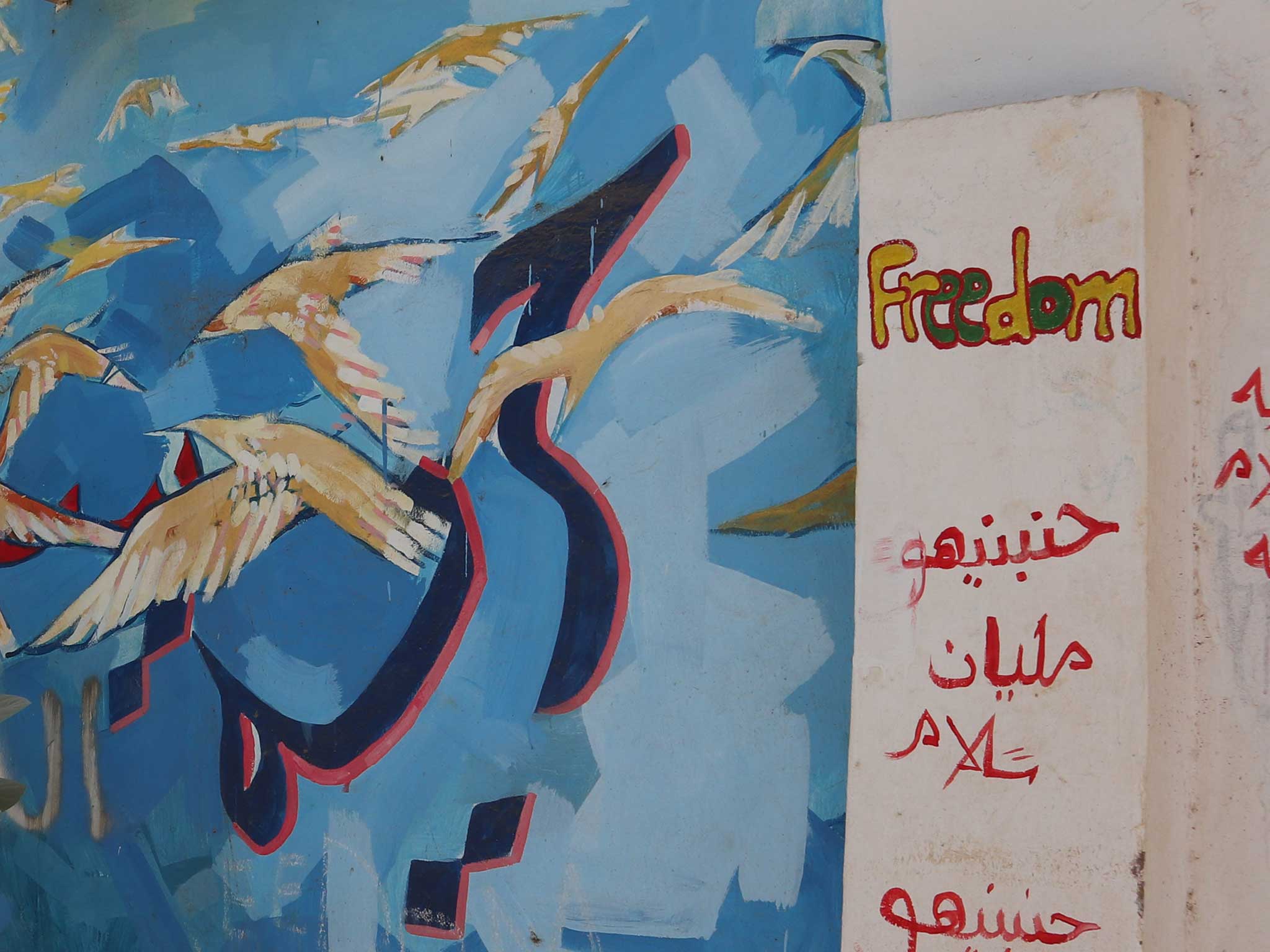
Graffiti on a concrete wall in Khartoum, Sudan. This photo was taken in 2019 and this mural is almost certainly destroyed today.
Photo: Rita Morbia/Inter Pares
A recent article by Inter Pares’ Rita Morbia provides a sobering overview of the humanitarian—and completely human-made—catastrophe unfolding in Sudan and calls for stronger Canadian action.
What can Canada do to support the people of Sudan?
So far, Canada has pledged $75 million in humanitarian aid for Sudan for 2025 and imposed targeted sanctions. And while Canada offers a family-based immigration pathway for Sudanese refugees, it’s currently closed to new applicants.
Canada must do more.
The first step to scaling up Canada’s action? The Carney government should appoint a special envoy to Sudan, Rita argues.
“Canada has an opportunity to demonstrate considerable leadership—through humanitarian commitments, diplomatic efforts, economic sanctions and immigration-related measures,” Rita writes.
“But the situation demands a high-level political advocate with dedicated expertise and experience, a hub for collaboration and action.”
This envoy would coordinate with civil society, diaspora groups and international partners, while helping to keep Sudan on the political and media agenda.
“There have been instances when, with limited but strategic resourcing, advocacy and action, Canada has led the way on important international issues,” Rita notes in the article.
“It is time we rose to that challenge once more. It’s not just the future of Sudan at stake; it’s our own humanity.”

Sudan is engulfed in a brutal civil war between the Sudanese Armed Forces (SAF) and the paramilitary Rapid Support Forces (RSF). The country is effectively split between SAF- and RSF-dominated zones.
“Life under the former is difficult; life under the latter is impossible,” Rita writes.
Most recently, the RSF has taken control of El Fasher, in western Darfur, after waging a brutal 18-month siege on the city.
Since the conflict started in 2023, nearly 12 million people have been forced to flee their homes, with one-third fleeing the country. Combatants on both sides have blocked aid from reaching civilians and famine and starvation deaths are widespread. Infrastructure destruction includes hospitals, schools and water systems.
The RSF is systematically committing sexual violence and a number of sources, including the U.S., have described its actions as genocide.